Immersive theatre · 2022
A MAH-tter of Life and Death
How do you get a general museum audience to play along, in a public space, for 90 minutes? An original murder mystery in the Egyptian wing of Geneva’s Musée d’Art et d’Histoire.
- Role
- Created, written, directed and produced
- Context
- Fête du Théâtre, with the MAH and The Murderet improv troupe
- Team
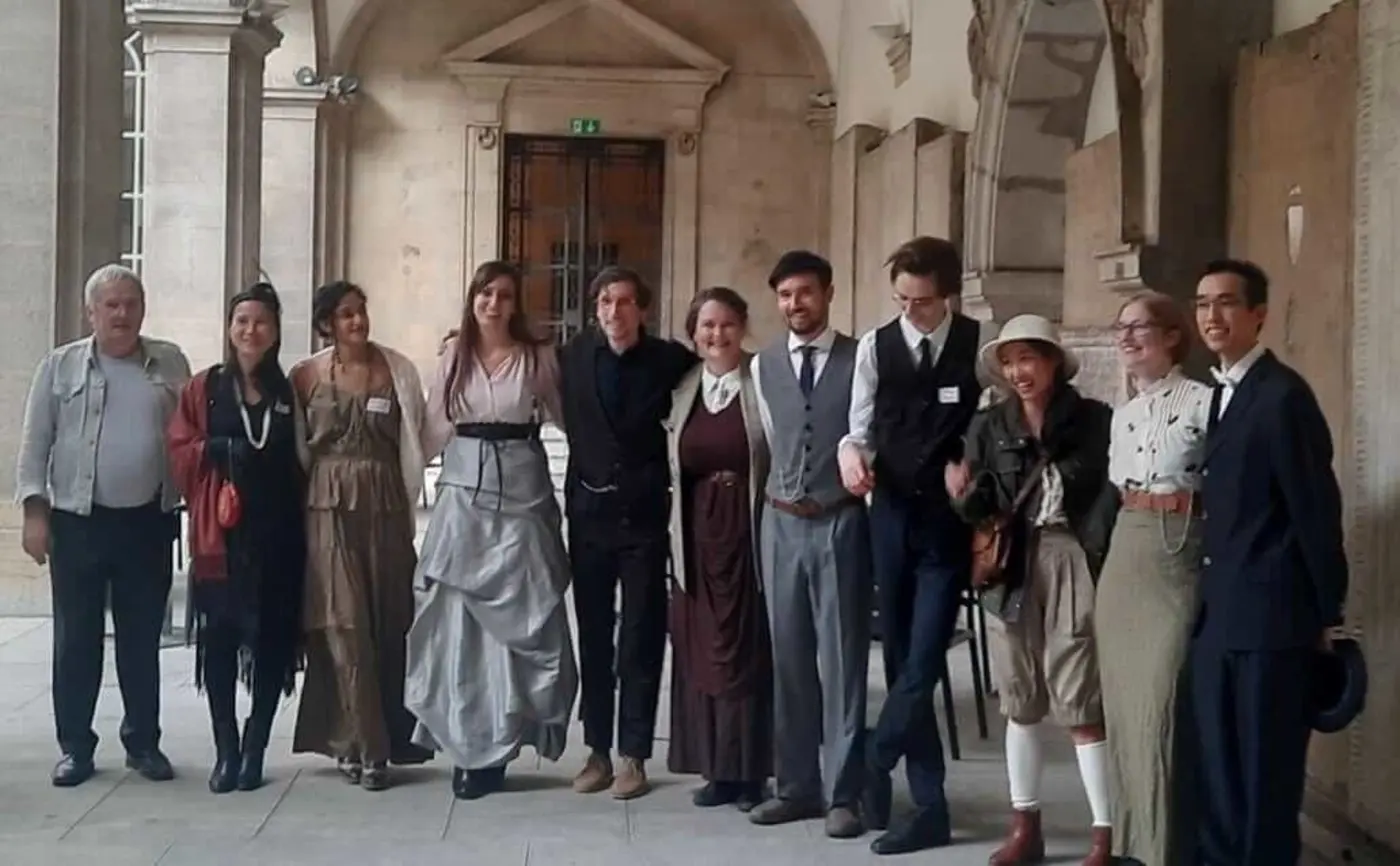
- 7 cast, 3 floating cast, 5 crew
- Timeline
- 4 months from proposal to a 90-minute show
The brief
The museum had been running Cluedo-style evenings since 2013. For the 2022 Fête du Théâtre, it wanted something that would bring in a different audience, particularly young international adults, and show them the permanent collection in an unexpected way. We proposed something more ambitious: turn the Egyptian archaeology wing into a living mystery.
I want the audience to (re)discover the museum in a fun way, while discovering a new medium: immersive theatre.
The real design problem: participation
There is no stage in immersive theatre. The audience shares the space with the actors, and that changes everything. For many guests it would be a first. Some would be shy, all of them were in a public space, and every one of them needed to feel safe enough to play. At the same time, the show had to reward the adventurous without leaving quieter guests behind. So we designed levels of engagement that ran in parallel:
- Shared scenes, with the whole audience following the main story. No participation required.
- Free exploration: suspects spread across the rooms, where guests could question them and collect clues.
- Collective choices: votes that let the audience weigh in on the investigation.
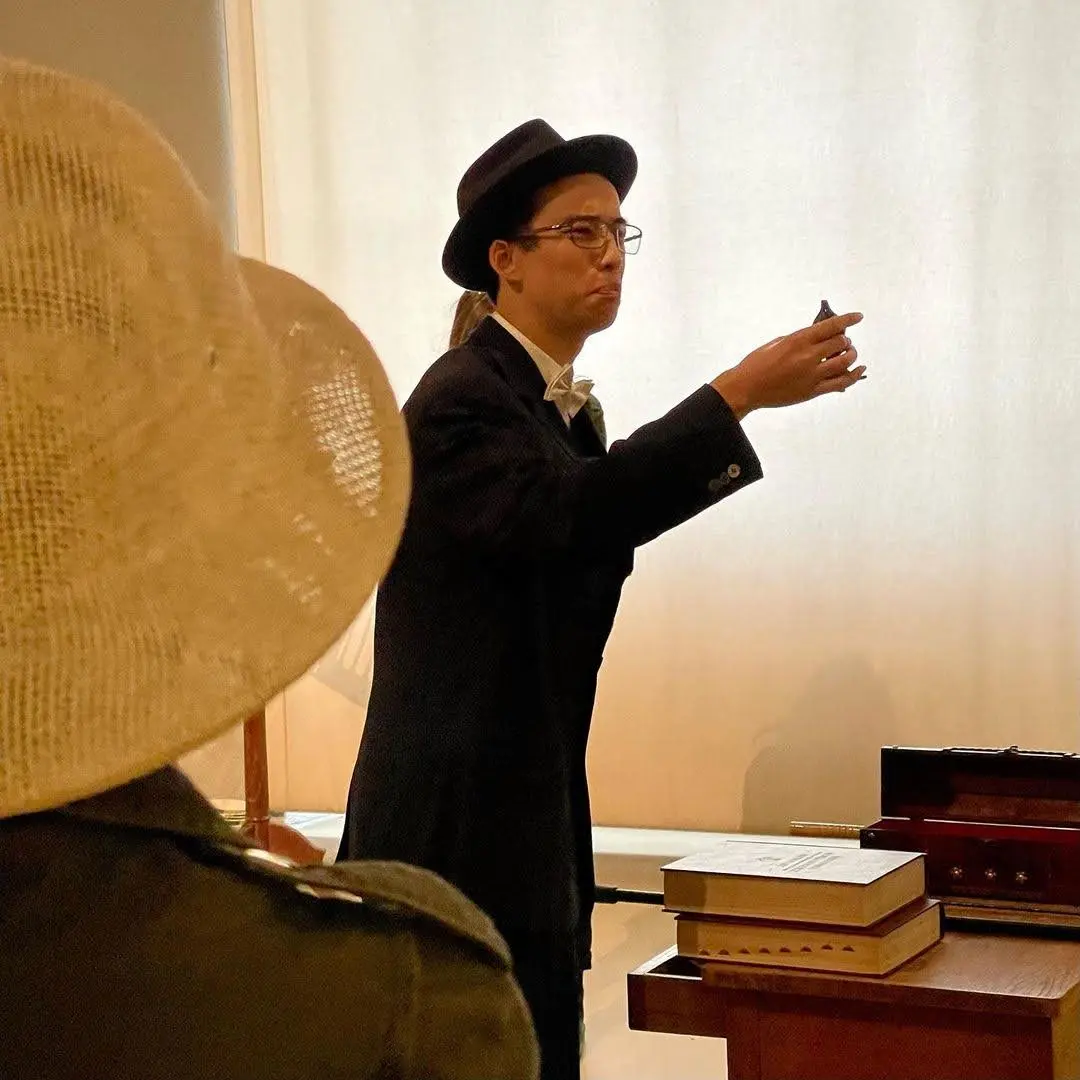
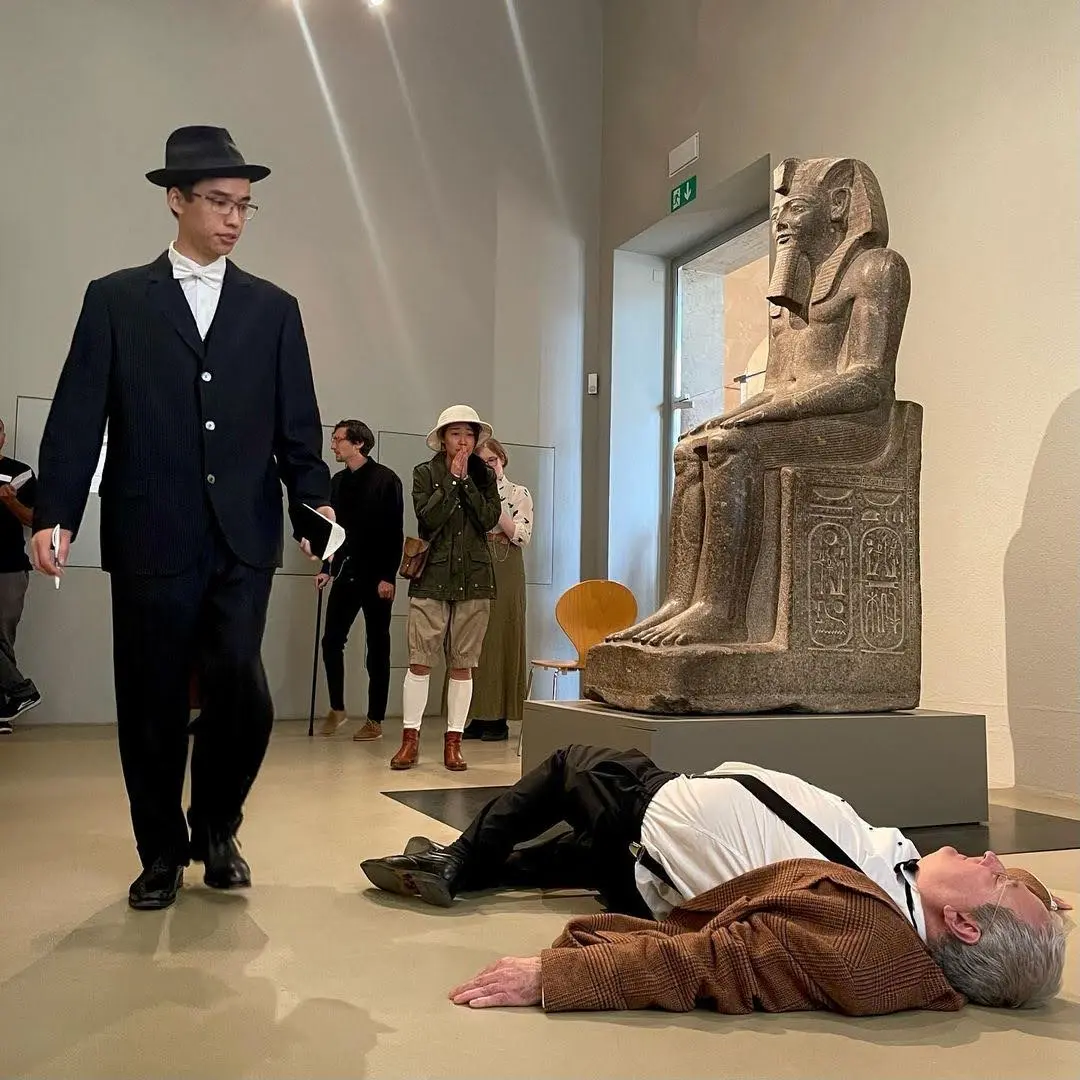
The setting was an explorers’ society around 1900, somewhere between Agatha Christie and Indiana Jones. The museum’s own collection became part of the story world, not just the backdrop.
How the evening ran
On arrival, guests were split into two factions, which created stakes straight away. A leader announced plans to return a sacred artefact, the crowd divided, and then there was a scream, a body, and an investigation. The suspects scattered through the galleries; guests questioned them, gathered clues and voted on the murder weapon. Finally, everyone came back together for the verdict, followed by flashback scenes reconstructing the crime, and a clear transition out of the fiction. I care about the experience from the first moment to the last.
Producing it
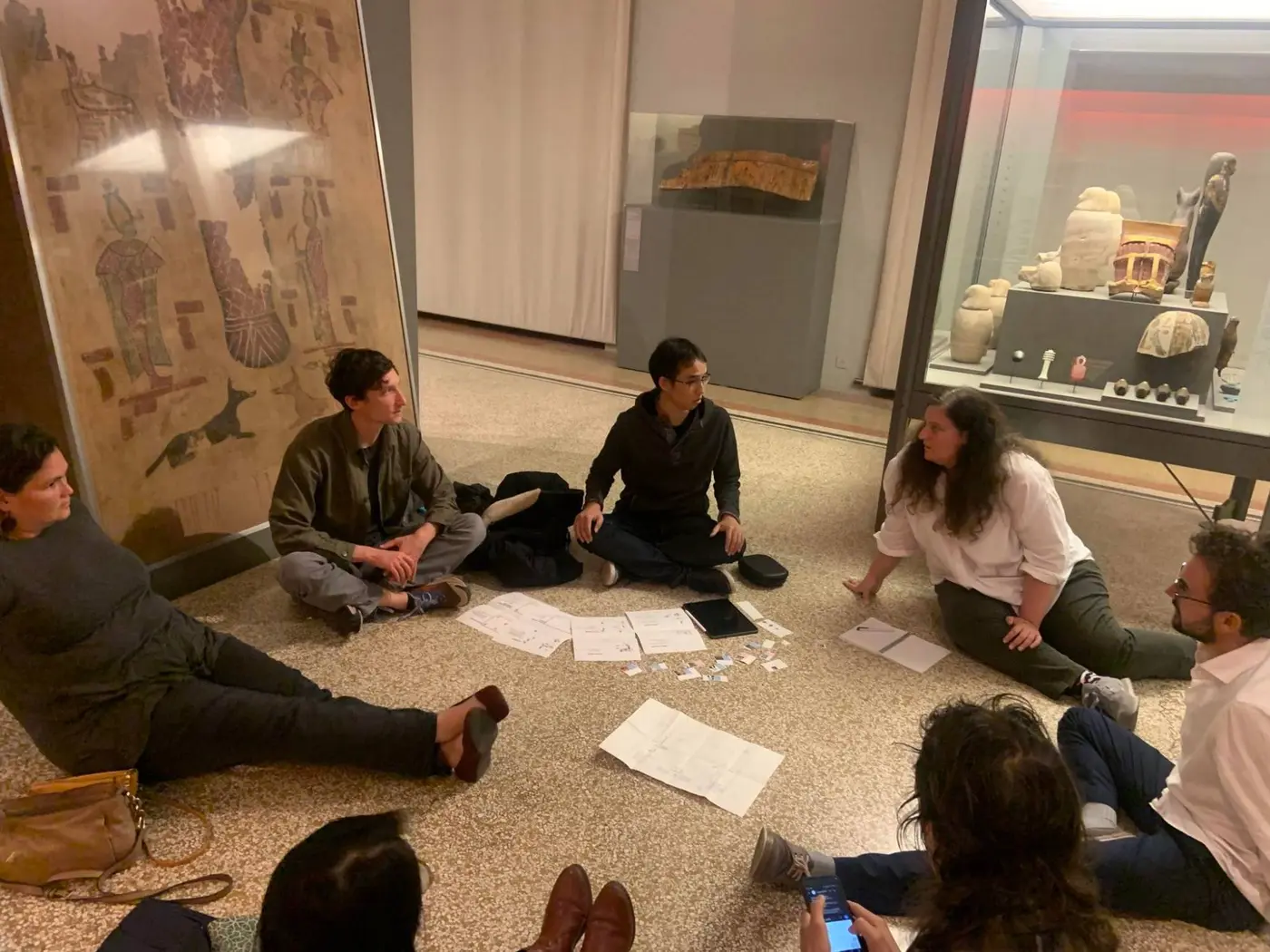
Beyond writing and directing, I ran the production: the proposal, the admin, scheduling and communication with the museum. The cast and crew were volunteers, so a lot of the work was organisational: keeping people motivated, and aligning an improv troupe’s instincts about structure and ownership with a museum’s constraints and communication protocols. I led, and leaned on a few trusted sounding boards along the way.
What I took from it
In immersive work, the way participation is designed is the experience. Story, setting and costumes all serve a system that decides how people move, choose and feel agency. Get that wrong, and good acting won’t save it.
I also learned that the proposal and the debrief matter as much as the show. The written proposal, with its phases, levels of interaction, audience segments and long-term vision, is what opened the door. A more resourced version, with sound, lighting, set design and ticketed runs, is still something I’d love to build.
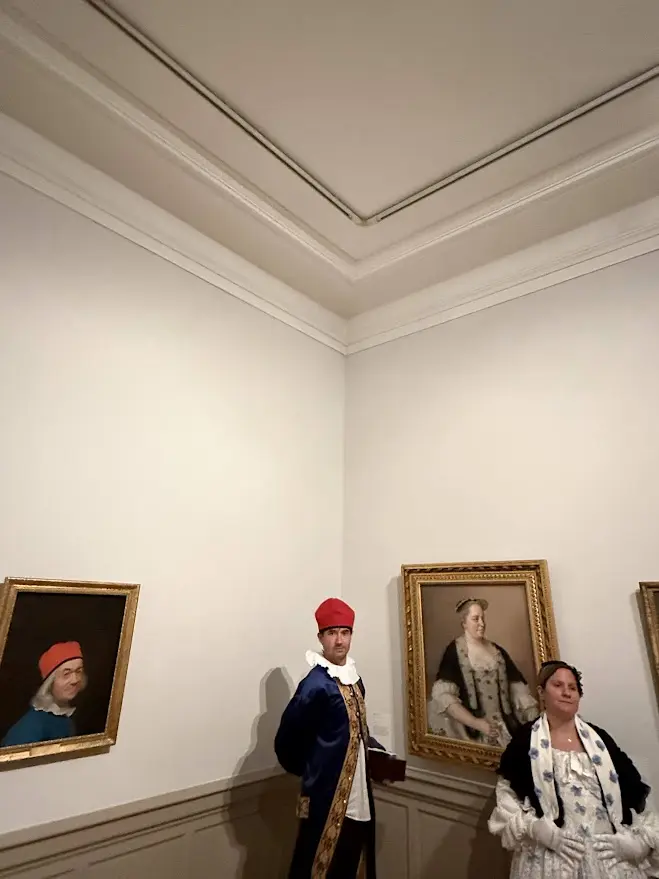
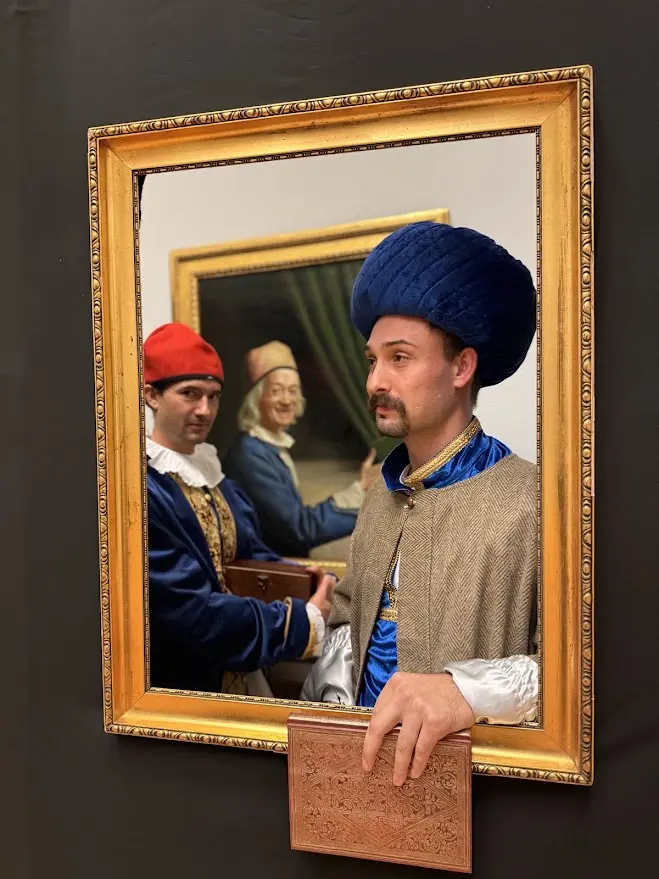
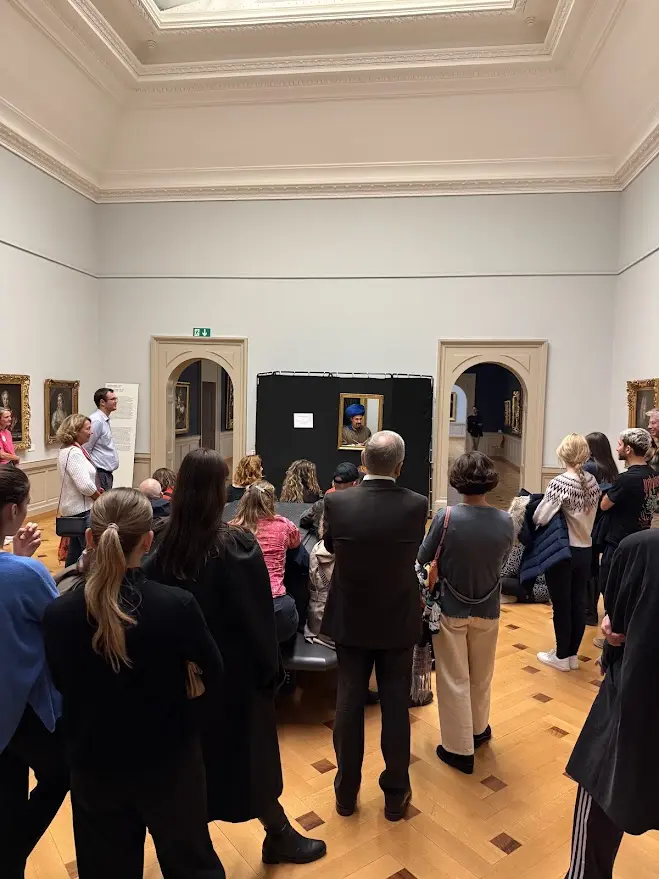
Back at the museum, 2026
Liotard Awakens was an after-work evening of talking portraits: actors framed as Liotard’s paintings, chatting with visitors. Yohann Thenaisie directed it. The idea came out of our brainstorming, and I was the one who landed on it. This time I chose to support rather than lead: concept designer, sounding board, and the person making things happen backstage.