Forum theatre · 2021–2023
Des vies déviées
Can a room of academics and university leaders recognise their own biases, without being lectured? A commissioned forum-theatre show for the University of Lausanne, performed by researchers.
- Role
- Casting, writing, training, direction, MC
- Commissioned by
- UNIL Office of Equality & Centre LIVES; re-run for HEC Lausanne
- Format
- Short play + forum theatre, in French
- Through
- The Catalyst, a science-entertainment collective
The brief
The University of Lausanne’s Office of Equality and the Centre LIVES wanted to show how implicit (or unconscious) biases, such as sexism, racism and bias based on appearance, shape researchers’ careers over time. The audience would be academics and university leadership: people who might hold those biases without knowing it.
They came to us because we were researchers ourselves. That gave the show credibility, and access, that a purely theatrical company wouldn’t have had. Together we set three goals:
- show biases the audience would recognise in themselves;
- show how they add up over a career;
- show what can actually be done, without offering a neat, false resolution.
The format
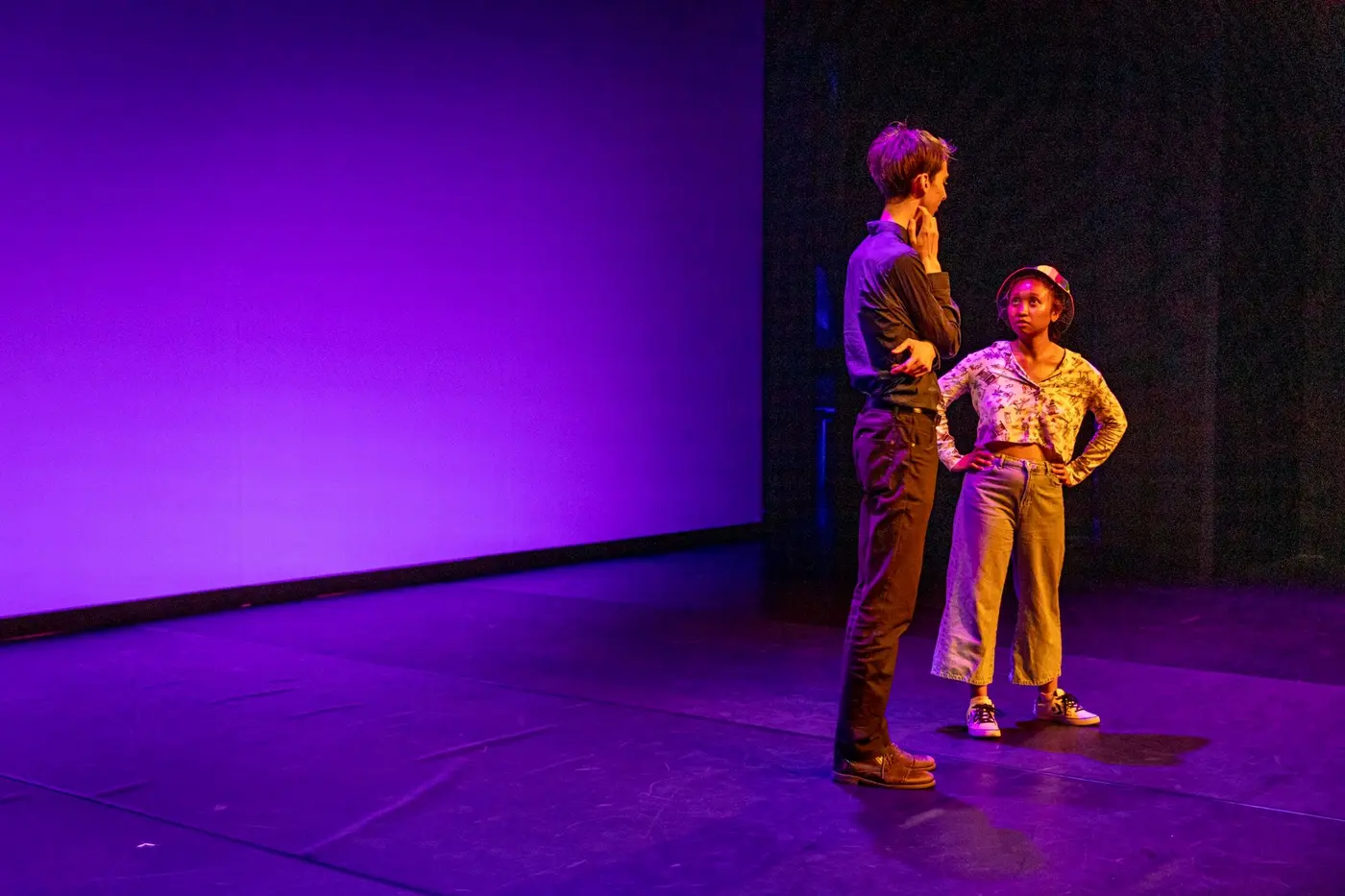
The first part is a 15-minute play, developed through improvisation and set in a world where the gender order is reversed. Seeing familiar situations flipped makes them easier to recognise, and harder to defend.
The second part is forum theatre, from the Theatre of the Oppressed tradition. A scene of everyday discrimination is played once. Then it’s played again, and audience members can stop it, step in, and try to change how it ends.
Casting
I cast for character first: people who are easy to work with and can hold their own. Then lived experience of the topic, and for a cast that reflected the diversity of the people the show was about. Technique came second, and turned out to be more than enough: a mix of stage-ready improvisers, confident public speakers, and people who just needed a nudge. On this project I cast before writing, so the scenes could be tailored to the people playing them.
My first session is always about building the ensemble: trust, then vulnerability. A cast has to trust each other before they can be vulnerable together, let alone in front of an audience.
Writing and rehearsing
Scenes came out of brainstorming sessions where cast members drew on their own experiences, then went through rounds of feedback with the client and a few trusted sounding boards. We held three full rehearsals and one session devoted to a single skill: playing the villain convincingly. A story needs its villain. Without that work, performers pull their punches, and the scenes don’t feel real enough for anyone to react.
Between group rehearsals I had one-on-one calls with each cast member, from 30 minutes to two hours, to check how they were living with the material and whether they felt ready.
On the night
I MC’d both performances: framing each part, managing the switch from scripted scenes to live forum, and holding the room for the people who chose to step in. The room was heavy, and people were hesitant. The job was to leave space for real responses while keeping the evening moving.
What worked, and what I learned
Casting for lived experience worked. The audience responded strongly because the performers had lived these situations. Several people recognised themselves in the victims, which is powerful, and has to be handled with care.
The forum was too short: people were just warming up to participating when we had to close. Forum theatre works best as it was designed, as a workshop where everyone takes part. A show reaches a larger audience, and that’s a trade-off worth making, as long as it’s made knowingly and the forum gets enough time.
What it left behind
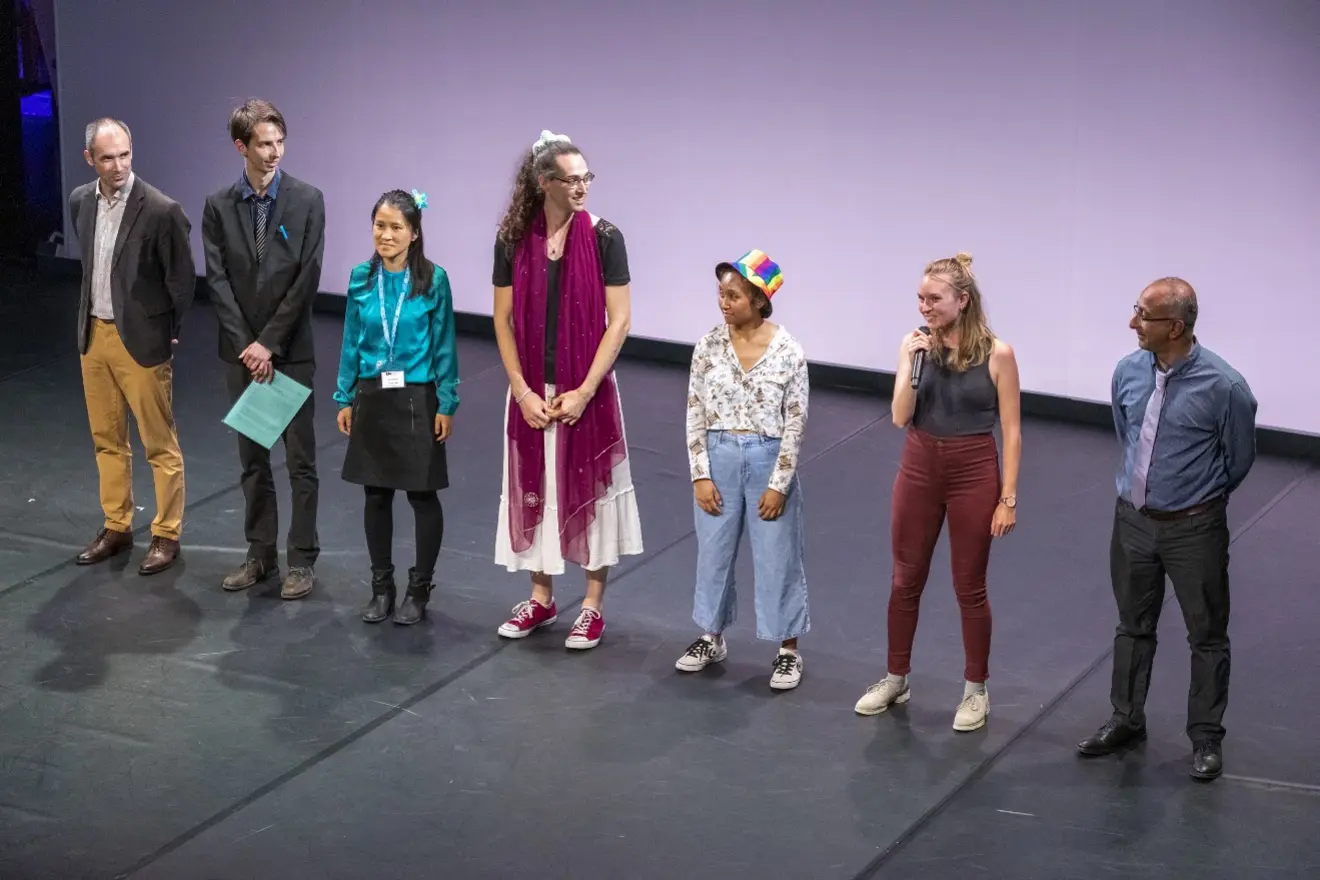
The client invited us back for a second performance at HEC Lausanne in 2023, and introduced us to another institution as a possible partner. We didn’t go further: my thesis needed my time, and many cast members left Geneva, which made training a new cast too costly. The scripts and method are documented, so the show can be revived in French or English, or adapted to a new context.
Watch the first part of the show: YouTube · Press: UNIL news · Centre LIVES